
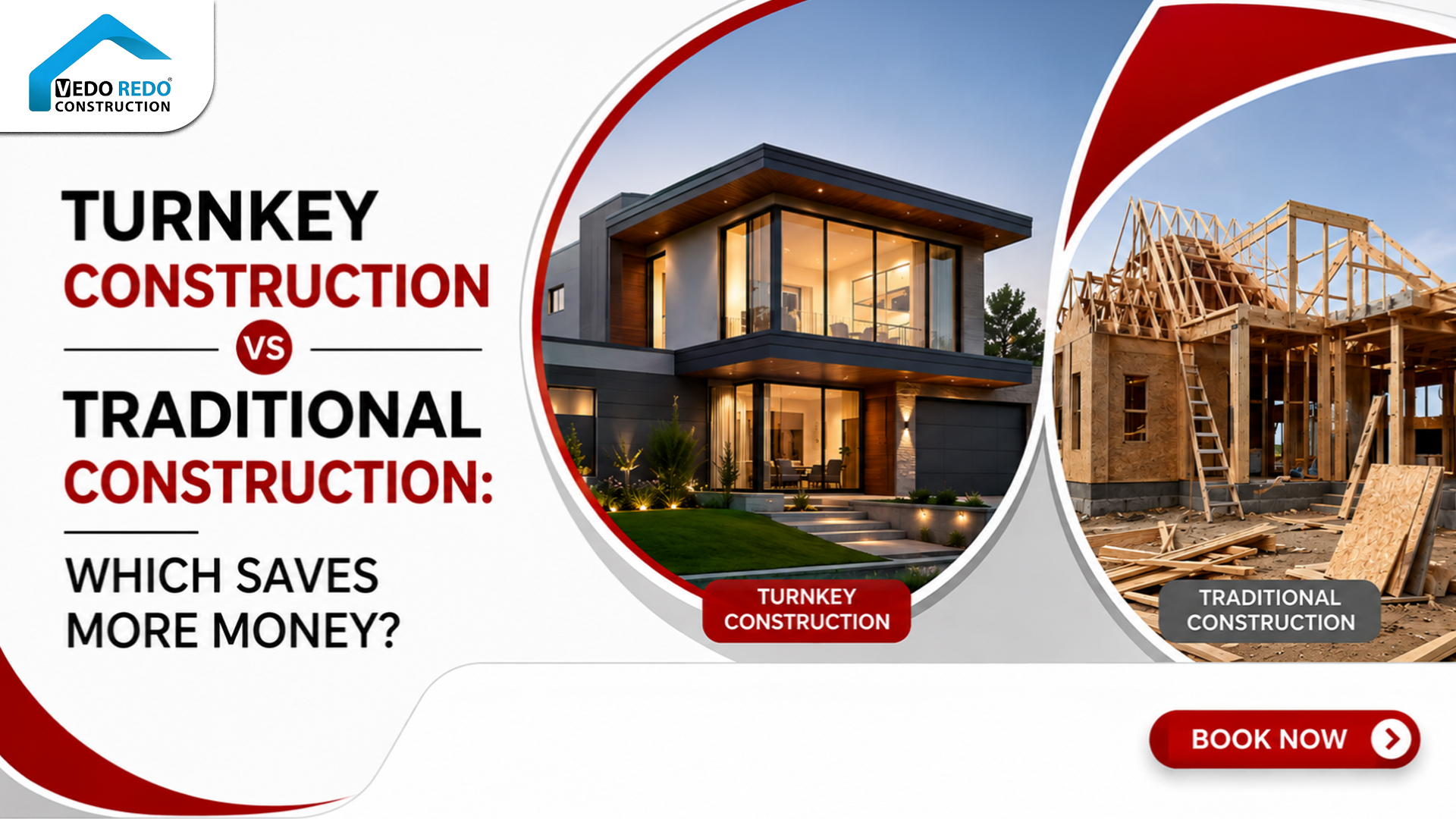
Building a home involves countless decisions, but one of the most important choices homeowners face is selecting the right construction approach. Among the most common options are turnkey construction and traditional construction. While both methods can deliver a quality home, they differ significantly in terms of project management, cost control, timelines, and overall convenience.
For homeowners planning a new residential project, understanding the differences between these two approaches is essential for making an informed investment decision. As the best construction company in Thanjavur, VEDO REDO helps clients evaluate the most suitable construction method based on their budget, requirements, and long-term goals.
Turnkey construction is a comprehensive construction solution where a single contractor is responsible for managing the entire project from start to finish. This includes planning, design, material procurement, construction, quality control, and final handover.
The term “turnkey” refers to a project that is ready for occupancy upon completion. Homeowners can simply take possession of the property without having to coordinate multiple vendors, suppliers, or subcontractors throughout the construction process.
This approach offers a streamlined experience by placing responsibility for the entire project under one professional team. It allows homeowners to focus on their vision while the construction company handles execution and day-to-day management.
Traditional construction follows a more fragmented approach. In this model, homeowners often take an active role in managing different aspects of the project. They may hire separate professionals for architectural design, structural engineering, material procurement, labor management, and interior finishing.
While this method provides greater control over individual decisions, it also requires substantial involvement from the homeowner. Coordinating multiple vendors and ensuring that every stage progresses smoothly can become time-consuming and challenging, particularly for those without construction experience.
Traditional construction is often chosen by homeowners who prefer direct oversight and wish to make independent decisions regarding materials, suppliers, and project execution.
When comparing costs, many homeowners initially assume that traditional construction is the more affordable option because they have direct control over purchasing decisions. However, the reality is often more complex.
In traditional construction, unexpected expenses frequently arise due to project delays, material wastage, labor coordination issues, and changes made during construction. Since multiple parties are involved, budget management can become difficult, leading to cost overruns.
Turnkey construction, on the other hand, usually operates under a clearly defined project budget. Professional construction companies leverage established supplier networks, efficient procurement systems, and detailed planning processes to optimize costs. This often results in better budget control and fewer financial surprises throughout the project.
For many homeowners, turnkey construction ultimately provides greater financial predictability and reduces the risk of hidden expenses.
Time is another important factor when evaluating construction methods. Delays can significantly increase project costs and create additional stress for homeowners.
Traditional construction projects often experience delays due to coordination challenges between different contractors, material shortages, scheduling conflicts, and communication gaps. Since responsibility is divided among multiple parties, identifying and resolving issues may take longer.
Turnkey construction simplifies project management by assigning responsibility to a single contractor. This centralized approach improves communication, streamlines decision-making, and helps maintain project schedules. As a result, turnkey projects are often completed more efficiently and within the agreed timeframe.
For homeowners who value convenience and timely completion, turnkey construction offers a significant advantage.
Maintaining consistent quality throughout a construction project requires careful supervision and coordination. In traditional construction, quality standards may vary depending on the contractors and suppliers involved.
When issues arise, determining responsibility can become difficult because multiple parties contribute to different stages of the project. This can lead to delays in resolving problems and additional expenses.
Turnkey construction provides a single point of accountability. Since one company manages the entire project, quality control processes are typically more consistent and comprehensive. Homeowners benefit from greater transparency and confidence that construction standards are being maintained throughout the project lifecycle.
Working with the best construction company in Thanjavur ensures that every stage of the project meets professional quality standards and industry best practices.
The answer depends on the homeowner’s priorities, experience, and level of involvement they wish to have during the project.
Traditional construction may appeal to individuals who have construction knowledge, ample time to manage vendors, and a desire for complete control over every decision. However, it often requires significant effort and carries a greater risk of delays and budget fluctuations.
Turnkey construction is generally better suited for homeowners seeking convenience, efficiency, and cost predictability. By consolidating project management under a single experienced team, homeowners can reduce stress while maintaining confidence in the quality and progress of their project.
For most residential construction projects, turnkey solutions provide a more structured and reliable approach, making them an increasingly popular choice among modern homeowners.
Choosing between turnkey construction and traditional construction is one of the most important decisions in the home-building journey. While traditional construction offers flexibility and direct involvement, it often comes with greater management responsibilities and potential cost uncertainties.
Turnkey construction provides a more streamlined experience by combining planning, procurement, execution, and quality control under one roof. This approach simplifies the construction process, improves accountability, and helps homeowners maintain better control over both timelines and budgets.
For those looking to build a home with minimal stress and maximum efficiency, turnkey construction often proves to be the more cost-effective solution in the long run.